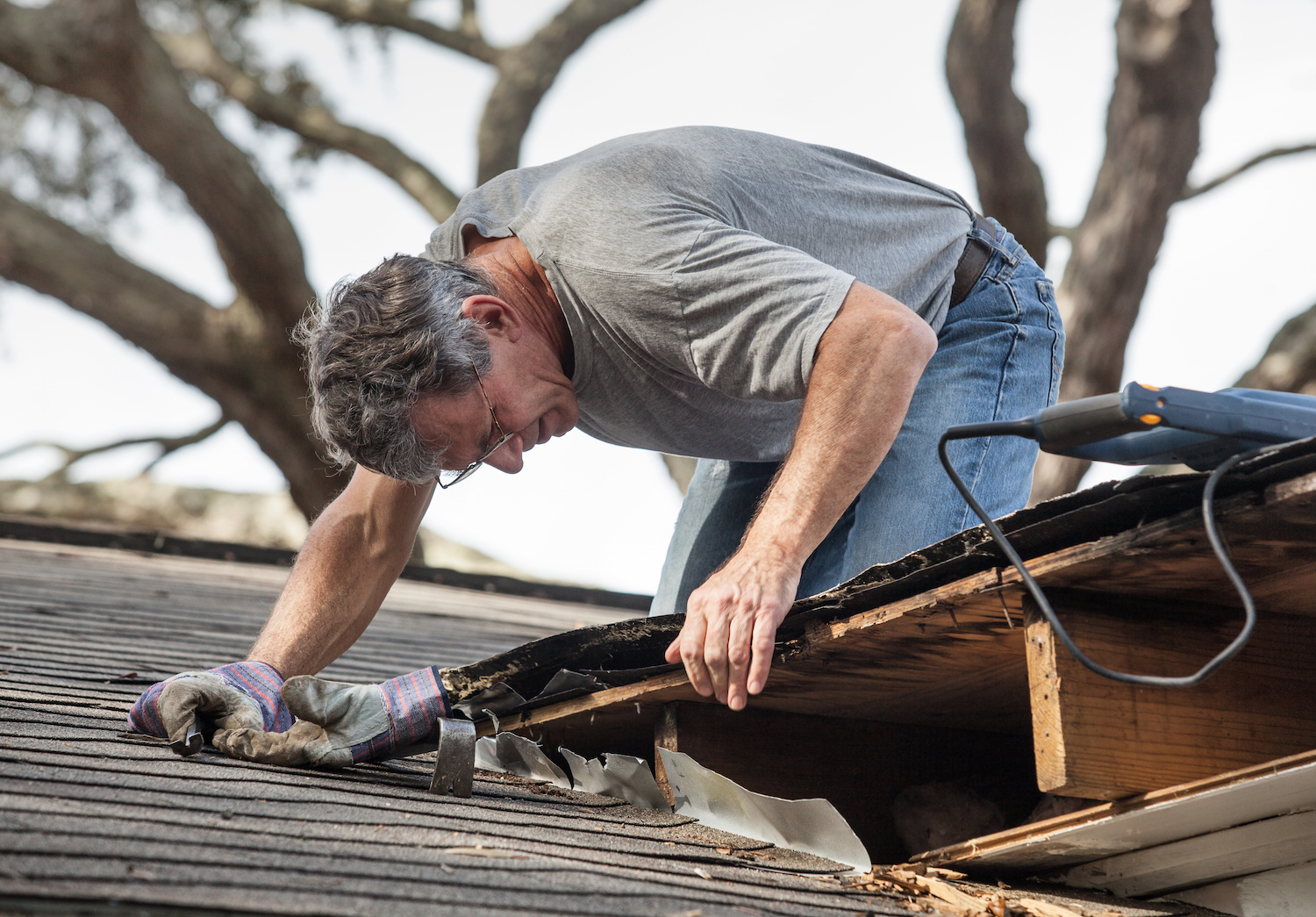
You do not have to wait for a hurricane to get roof damage from a tree. Around here, fall is when we see it: a dry spell, then a wet week, then a north wind that shows up hard and fast. The yard looks fine from the driveway, but up over the eaves you have a limb that’s been rubbing the shingle edge for months, or a heavy branch hanging over the valley. After the first real front, you find a dented gutter, a pile of leaves in one spot, and a couple of fresh scuffs on the roof.
What catches homeowners is the hidden part. A limb does not have to punch a hole to start a chain of problems. It can crack a shingle mat, bruise the granules off, bend drip edge, or rack the gutter so water starts running behind it. If you’ve got tree damage roof Texas City TX concerns right now, this is the window to fix the weak points before the next wind event.
Limb-drop damage starts at edges, not the middle of the field
Most branch hits land at the perimeter. That’s where the roof changes direction and where the metal work lives. The first things we check are the rake edge, eave edge, and any valley metal nearby. A limb that lands and rolls can lever up the first course of shingles and break the seal strip. Once a shingle is unsealed, a 30 to 40 mph gust can lift it enough to crease the fiberglass mat. That crease does not “lay back down” the way people hope.
On the metal side, drip edge is thin for a reason, usually aluminum coil stock. It bends easily. If it gets kicked up, capillary action can pull water back under the shingle edge. We also see fascia dents that open up a gap behind the gutter apron. That gap becomes a leaf trap, then water sits there, then the wood stays wet.
If the branch hit near a valley, look for granule piles and shiny scuff marks on the valley flashing. Even a small gouge in painted valley metal is a rust starter once salt air and wet leaves sit on it.
The gutter and fascia tell you where the impact energy went
Gutters are like a witness. They show you the direction and the force. After a limb strike, you will often see one of three things: a crushed front bead, a separated end cap, or hangers pulled out of the fascia.
Most modern installs use hidden hangers with screws, often 1 1/2 inch to 2 inch fasteners into fascia. A limb can yank those screws sideways. That does two kinds of damage. It elongates the hole in the fascia board, and it twists the gutter so it loses slope. A gutter that is off by even 1/4 inch over a run will hold water and sludge. That weight adds stress every time it fills.
Check the fascia line under the dent. If the paint is cracked and you see dark staining, that is long wetting, not a one-time hit. Also look at the soffit panels. A hard impact can pop a vinyl soffit lock and open a gap for wind-driven rain.
If the gutter is pulling away, do not just push it back. The fastener holes are usually compromised. We reset the line, reestablish pitch, and move fasteners into solid wood. That keeps the edge of the roof from becoming a repeat failure.
Shingle bruising is real, and you can’t always see it from the ground
A branch can bruise an asphalt shingle without tearing it. The granules look “dusty” in one spot, or you see a dull patch that does not match the surrounding shingles. Under that spot, the asphalt has been compressed and the fiberglass mat can be fractured. The next hot day softens the asphalt, then the next cool night tightens it back up, and that bruise turns into a crack line.
In fall we are in that swing. You can have 60 degree mornings and 85 degree afternoons. Those daily cycles work a damaged shingle hard.
There are a few places bruises matter more:
- Ridge and hips: ridge cap shingles are thinner and take direct hits.
- Over decking joints: if the shingle is already spanning a slight dip, impact finishes the job.
- Over the starter course at the eave: a bruise there can break the seal and start edge lifting.
A proper inspection is hands-on. We look for soft spots, displaced granules, and cracked sealant lines. If we find widespread bruising, that can push a repair into a roof replacement conversation, especially if the roof is already past 15 to 20 years.
Decking edge damage and lifted drip edge are quiet roof replacement triggers
People think of decking as the big flat area, but the edge is where branch hits do the most structural harm. The roof sheathing is usually 7/16 inch OSB on a lot of homes. It holds nails well when it is dry and intact. It does not like repeated wetting.
A limb strike at the eave can do this sequence: bend the drip edge up, crack the shingle edge, then let water get to the OSB edge. OSB swells first at the edge. Once it swells, the shingles at that edge stop lying flat. Then the wind gets under them more easily.
If we see a wavy eave line, we do not guess. We pull a few shingles back and check the sheathing for swelling and delamination. We also check nail bite. If the nail shank is no longer grabbing solid wood because the OSB has turned to flakes, the fix is not a dab of sealant. That section needs new decking.
This is also where code details show up. Drip edge needs to be properly lapped, and the underlayment has to be tied into it the right way at eaves and rakes. After an impact, we make sure those layers still shed water in the right direction.
Fasteners back out after a hit, especially around ridges and vents
A roof takes a shock load when a limb hits it. The shingle might look fine, but the fasteners underneath can shift. Nails can back out a hair, or the shingle can slide slightly and leave a nail head exposed. That is when you start seeing a rusty dot or a small raised bump later. If you’re seeing those, this is the same issue we cover in nail pops on Texas City roofs and what they mean.
We pay special attention to ridge vents, box vents, and any pipe boots near the impact zone. Those are areas with different materials and different fasteners. Ridge vent caps are often nailed with longer roofing nails, and if the decking is stressed, those nails can lose bite.
On pipe penetrations, the rubber boot can split from impact vibration or from being pushed sideways by a branch that drags. Most pipe boots are EPDM rubber. EPDM holds up well, but once it tears, it keeps tearing. A 1/4 inch split turns into a longer tear over a season.
If we find exposed fasteners on metal accessories, we reset them with the correct gasketed screws. We also replace any cracked plastic caps. These are small parts, but they stop small failures from turning into a full tear-off later.
Leaves and small twigs create a wet roof even after the limb is gone
After the branch is off the roof, the roof is not “back to normal.” In fall, the debris that comes with limb drop is what keeps the roof wet. Wet shingles hold heat differently, they age faster, and they grow algae faster, especially where shade sits on the north side. If you’re already seeing staining, this ties into black streaks and green patches on Texas City roofs, what’s normal and what needs attention.
The trouble spots are predictable:
- Valleys: leaves bridge across the valley and trap water.
- Behind chimneys and walls: debris piles where the roof turns up.
- At the eave above the gutter: twigs catch on the drip edge and start a dam.
We also see micro-damage from abrasion. Twigs rub in the wind and scrub granules off. That looks like normal aging until you compare it to the rest of the slope. If you’re finding grit at the downspouts, read roof granules in your gutters around Texas City.
Cleaning is not about making it pretty. It is about getting the roof to dry out between rains. If you are in Texas City, TX and you have oaks or pecans dropping right now, plan on at least one roof-level debris check during fall, not just a ground cleanup. This is the same reason we push fall gutter cleanout in Texas City and the roof damage it prevents.
What to document for insurance, and what we look for during replacement planning
If a limb hit hard enough to dent metal, break shingles, or pull gutters loose, take photos before anything gets moved. Wide shots, then close-ups. Put a tape measure in the frame for scale. Photograph the limb itself, especially if it is over 4 inches in diameter where it broke.
For insurance claims, the story matters. Date of the wind event. Direction of the wind if you know it. Any visible collateral damage like fence panels or siding. Keep receipts from emergency tarping if you had to do it. If you’re dealing with the aftermath, start with what to do after storm damage.
When we inspect for storm damage, we separate cosmetic marks from functional damage. Functional damage is what changes water shedding or fastener integrity: creased shingles, punctures, displaced flashing, crushed gutters that back up water.
If the roof is already near the end of its service life, limb damage can be the thing that forces a decision. At that point, we look at the whole system. Underlayment condition, decking edges, ventilation, and how the gutters tie in. A replacement done right includes those details, not just new shingles.
Key Takeaways
- Limb hits usually damage eaves, rakes, and valleys first, not the middle of the roof.
- A bent drip edge can start OSB edge swelling, especially on 7/16 inch decking.
- Shingle bruises often show up later as cracks after repeated 60 to 85 degree day swings.
- A pulled gutter hanger leaves compromised fascia holes, the fix is a reset, not a push-back.
- EPDM pipe boots and ridge vent caps can shift or tear from impact vibration, even without a puncture.
Conclusion
If you have limbs hanging over the roof, fall is the time to get ahead of it. The next front does not need to be a named storm to do damage, it just needs wind and a brittle branch. We treat tree strikes like a system check, not a single patch. Edge metal, decking bite, fasteners, gutters, all of it.
If you want us to look at tree damage roof Texas City TX homeowners are seeing this season, we will document what’s there, show you the spots that are going to keep getting worse, and tell you what can be repaired versus what is pushing the roof toward replacement. That way you are not guessing when the weather turns again. If you’re trying to get ahead of the next round of weather, cold fronts are coming, here’s what to check on your Texas City roof first.
References
- Weather forecasts, wind advisories, and storm reports for our area are published by the National Weather Service at https://www.weather.gov/.
- For roofing installation practices and technical bulletins, we refer to the National Roofing Contractors Association (NRCA) at https://www.nrca.net/.
- For the building code language that governs roof edge and underlayment details, we use the International Code Council’s code library at https://www.iccsafe.org/.