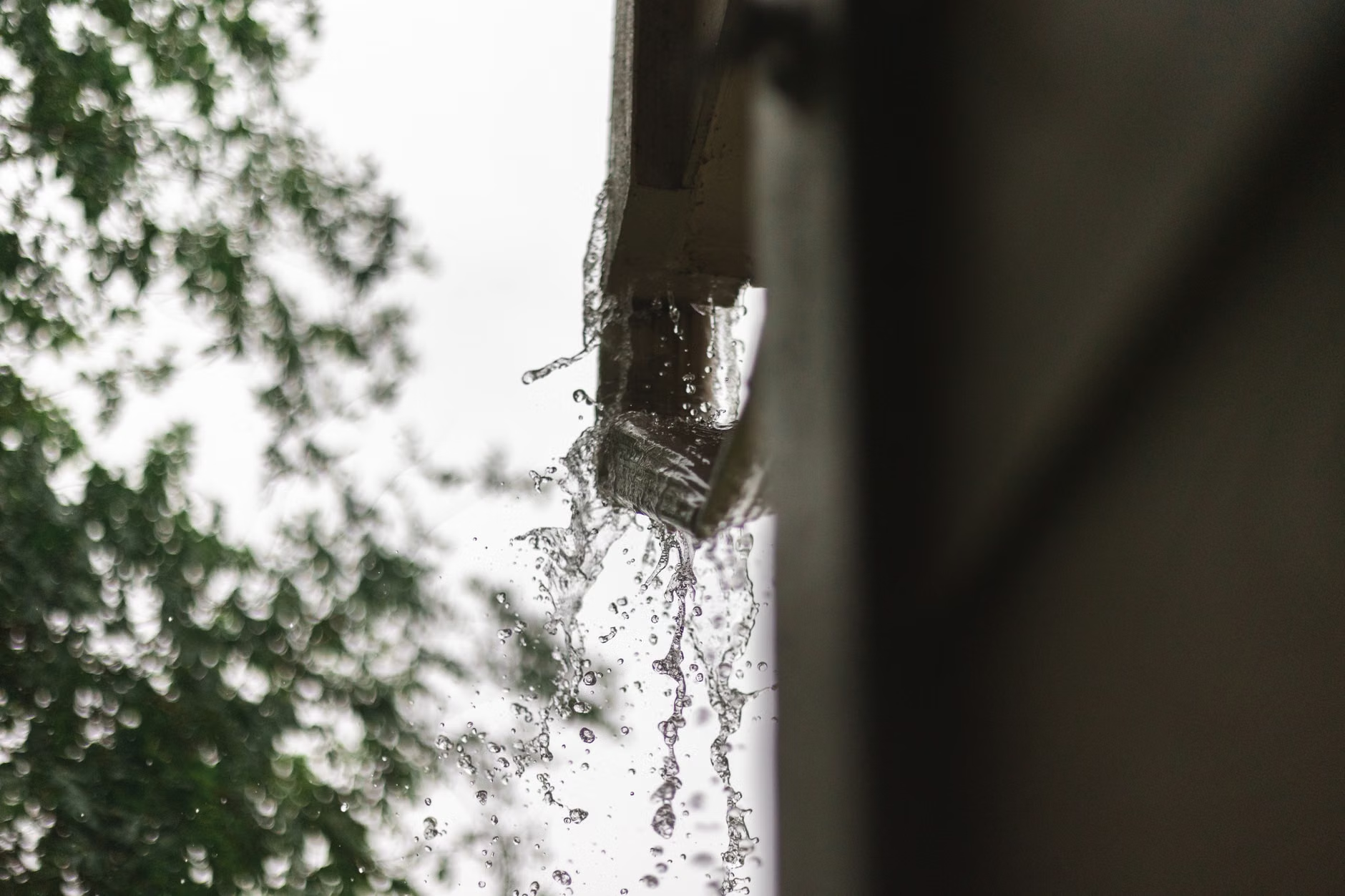
Fall on the Gulf isn’t crisp and dry. It’s warm days, sudden downpours, and a roof that still has summer heat baked into it (see why Texas City roofs show problems after summer heat). Add leaf drop from live oaks and pecans, plus pine needles that slide right into the trough, and gutters start acting like a dam. You see it first as water running over the front edge during a heavy rain. Then you notice dark streaks on the fascia, a soft spot at the corner, or paint bubbling under the eave.
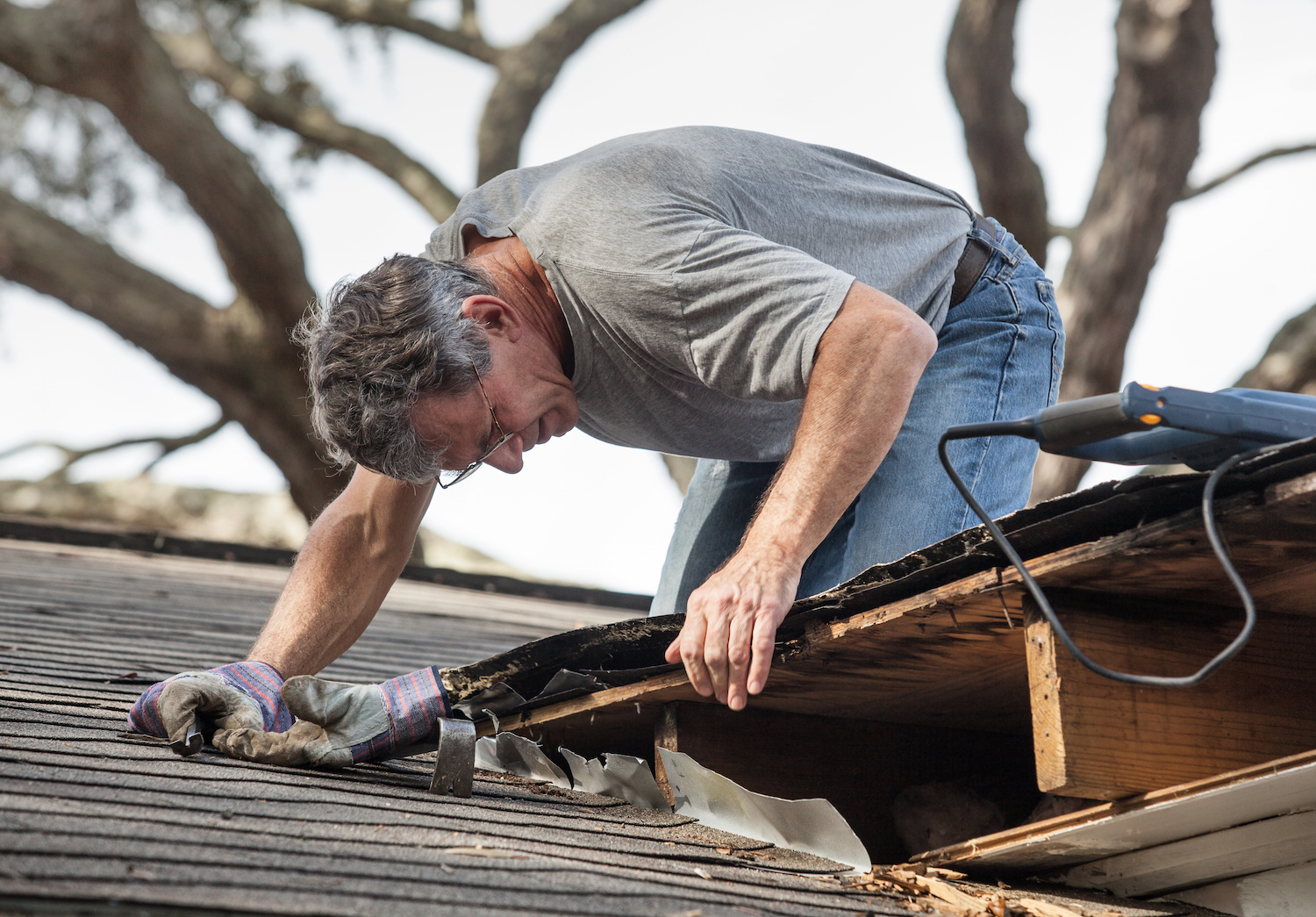
Here’s the part homeowners don’t connect right away. Overflowing gutters don’t just make a mess, they push water back into roof edges, under shingles, and into the wood that holds your drip edge and soffit together. That rot does not announce itself until it’s advanced.
A good fall cleanout is simple work, but it prevents the kind of edge damage that turns into leaks, deck repairs, and stained ceilings later.
Clogged gutters turn roof edges into a wet sponge
When gutters fill up, water stops moving where it’s supposed to. It sheets over the gutter lip, runs behind the gutter, or climbs back toward the roof edge. That constant wetting is hard on the first 24 inches of roof because everything there is layered and nailed.
On an asphalt shingle roof, the bottom course is sealed with adhesive strips that do fine in normal drainage. They do not like standing water. When water backs up, it can wick under the shingle edge and sit on the underlayment. If the roof edge was built with felt paper that’s been there 15 to 20 years, it can be brittle. Add repeated wetting and drying, and you start getting edge rot at the decking and nail pops along the eave.
We also see problems where the drip edge is missing or installed wrong. Drip edge should be corrosion-resistant metal, typically aluminum or galvanized steel, and it should kick water into the gutter. If water is running behind the gutter, it’s usually telling you the edge detail is failing, not just the gutter being dirty.
Downspouts and elbows that clog back up the whole system
Homeowners clean the trough and forget the downspouts. That’s where the plug usually is. A handful of oak leaves can lodge in a 2×3 downspout, then pine needles weave into it like rebar. Once that happens, the gutter fills in minutes.
Watch the first hard rain after a cleanout. If the downspout is working, you’ll see a steady, strong discharge within a minute or two. If it’s dribbling, backing up, or overflowing at an inside corner, there’s a blockage in the drop, the elbow, or the underground drain line.
A common setup is an elbow that turns into a corrugated extension. Those corrugated pieces trap debris fast, especially with roof grit and seed pods. Another issue is a downspout strap that’s loose, letting the pipe pull away and leak against the fascia.
Good practice is to flush downspouts with a hose after clearing (see best ways to clean gutters safely). If water doesn’t run clean and fast, the gutter is not “done.” It’s still one storm away from spilling over the edge and soaking the roof line.
Fascia and soffit rot starts with a small gap at the gutter line
Most of the rot we replace at eaves starts small. A gutter nail or hidden hanger pulls loose. A seam opens up. Water gets behind the gutter and runs along the fascia board. Fascia is often 1x wood, and once it stays wet it softens fast.
Soffit panels hide the early signs. You can have wet wood behind a vented aluminum soffit and never see it until the nails won’t hold, or until squirrels and insects find the soft spot. In our area, you also get mildew staining under eaves where water keeps washing the same strip.
A detail that matters is the drip edge to fascia relationship. The metal should extend far enough to direct water into the gutter, not behind it. If the gutter is mounted too low, water overshoots the back and hits the fascia anyway. If it’s mounted too high, the shingle edge can dump water behind the gutter.
If you can push a screwdriver into the fascia at an end cap or corner and the wood gives, that’s not “surface damage.” That’s a roof-edge repair in the making.
Heavy fall rains expose bad edge flashing and underlayment laps
Fall storms are when weak edge details show up. Not because the rain is magical, but because gutters are already loaded with debris, and the roof sees longer wet periods. That’s when water finds the small mistakes.
At the eave, the underlayment should lap over the metal at the edge, and the metal should be nailed correctly. If underlayment is tucked behind the drip edge at the eave, water that gets under the shingles can run straight onto the decking instead of out.
Valleys are another trouble spot. A valley dumps a lot of water into a small section of gutter. If that gutter is half full of leaves, water can surge up and sideways. On roofs with closed-cut valleys, that surge can push under the shingle edge at the valley line. On open metal valleys, the flow is faster, so the gutter has to keep up.
We also see ice-and-water style membranes used at eaves on some homes. They help, but they are not a substitute for drainage. If water is ponding at the edge for hours, even good membranes get stressed at nail penetrations over time.
Leaf guards help, but only if the roof edge and hangers are right
Leaf guards can reduce cleanouts, but they don’t cancel them. In fall, fine debris still gets through. Shingle grit, seed pods, and pine needles will build a thin mat that slows water. Once water slows, it drops more debris, and you’re back to overflow.
The bigger issue is installation. Many guards attach under the first shingle course or snap to the gutter lip. If the installer lifts shingles and breaks the seal strip, you can get a line of lifted tabs right along the eave (see shingles lifting or flapping in Texas City, is it an emergency or can it wait). That’s a wind and water problem, not a gutter problem.
Hangers matter too. Hidden hangers with screws hold better than spike-and-ferrule systems over time. Spikes loosen as fascia softens or as the gutter flexes. A loose gutter changes pitch, then water sits in the trough and breeds clogs.
If you want guards, we look at the shingle condition at the edge, the drip edge profile, and the gutter pitch. If those pieces aren’t right, guards just hide a drainage problem until the soffit starts staining.
Where roof leaks start: corners, kickout flashing, and chimney crickets
Not every fall leak is a hole in the field shingles. A lot of them start where roof water meets a wall, then tries to get into a gutter that’s already overwhelmed.
Two places to check are the inside corners and roof-to-wall transitions. Inside corners collect debris fast. If that corner overflows, water runs across fascia joints and into the soffit line.
At a roof-to-wall area, you want step flashing behind the siding and a kickout flashing at the bottom where the roof edge meets the gutter. Kickout flashing is that small, bent piece of metal that throws water into the gutter instead of letting it run down the wall. Without it, water rots the wall sheathing and the fascia together. We see this a lot on additions and patio covers.
Chimneys are another one. If you have a wide chimney on the downhill side, a cricket (a small peaked diverter) is often needed to split water and debris. If the cricket is flat or missing, leaves pile up behind the chimney, hold moisture, and you get leaks at the backpan flashing.
A fall checklist that keeps gutters from becoming a roof repair
A cleanout is not just scooping leaves. We treat it like an inspection because edge failures show themselves in small ways.
Here’s what we want homeowners to look for each fall in Texas City, TX:
- Run water and watch the flow. A working downspout moves water fast. If it takes more than a minute to start discharging strong, there’s a restriction.
- Check gutter pitch. A gutter should slope toward the downspout. If you see standing water 24 hours after a rain, the pitch is off or the gutter is sagging.
- Look at the drip edge line. Metal should be continuous, tight to the roof edge, and not wavy. Gaps invite water behind.
- Inspect fascia at end caps and corners. Probe gently. Soft wood means ongoing wetting.
- Confirm discharge. Downspouts should dump away from the foundation, not right at the slab edge. Extensions and splash blocks keep water from cycling back toward the soffit.
If anything here looks off, it’s worth having us look at the whole edge line. Small corrections now prevent decking repairs later (see does your Texas City roof need new decking too).
Key Takeaways
- A clogged gutter can push water back under the first shingle course and keep the roof edge wet for hours.
- Most “clean” gutters still fail if the 2×3 downspout or lower elbow is plugged.
- Missing or poorly installed drip edge lets overflow run behind the gutter and rot fascia boards.
- Kickout flashing at roof-to-wall transitions is a common missing piece that leads to soffit and wall rot.
- Leaf guards only work if gutter pitch, hangers, and shingle seals at the eave are kept intact.
Conclusion
Fall is when we see roof edges start to give up. Not the whole roof, the first few feet where water is supposed to leave cleanly and instead gets trapped. If your gutters overflow in a downpour, or you’ve got staining under the eave, don’t chalk it up to “just leaves.” That’s water taking a path it shouldn’t.
If you want us to handle gutter cleaning in Texas City, TX, we can also check the drip edge, fascia, soffit, and the roof-to-wall spots that turn a small drainage problem into a leak (see roof leak in Texas City after heavy rain, what to do first and wind-driven rain roof leaks in Texas City, TX). We’ll tell you what’s solid, what’s soft, and what needs to be fixed before the next round of heavy rains.
External references that back up key details in this article: International Residential Code (IRC), roof drainage and flashing provisions, the NRCA roofing manual with standard details and best practices, NOAA guidance on heavy rainfall and precipitation, OSHA ladder safety guidance.