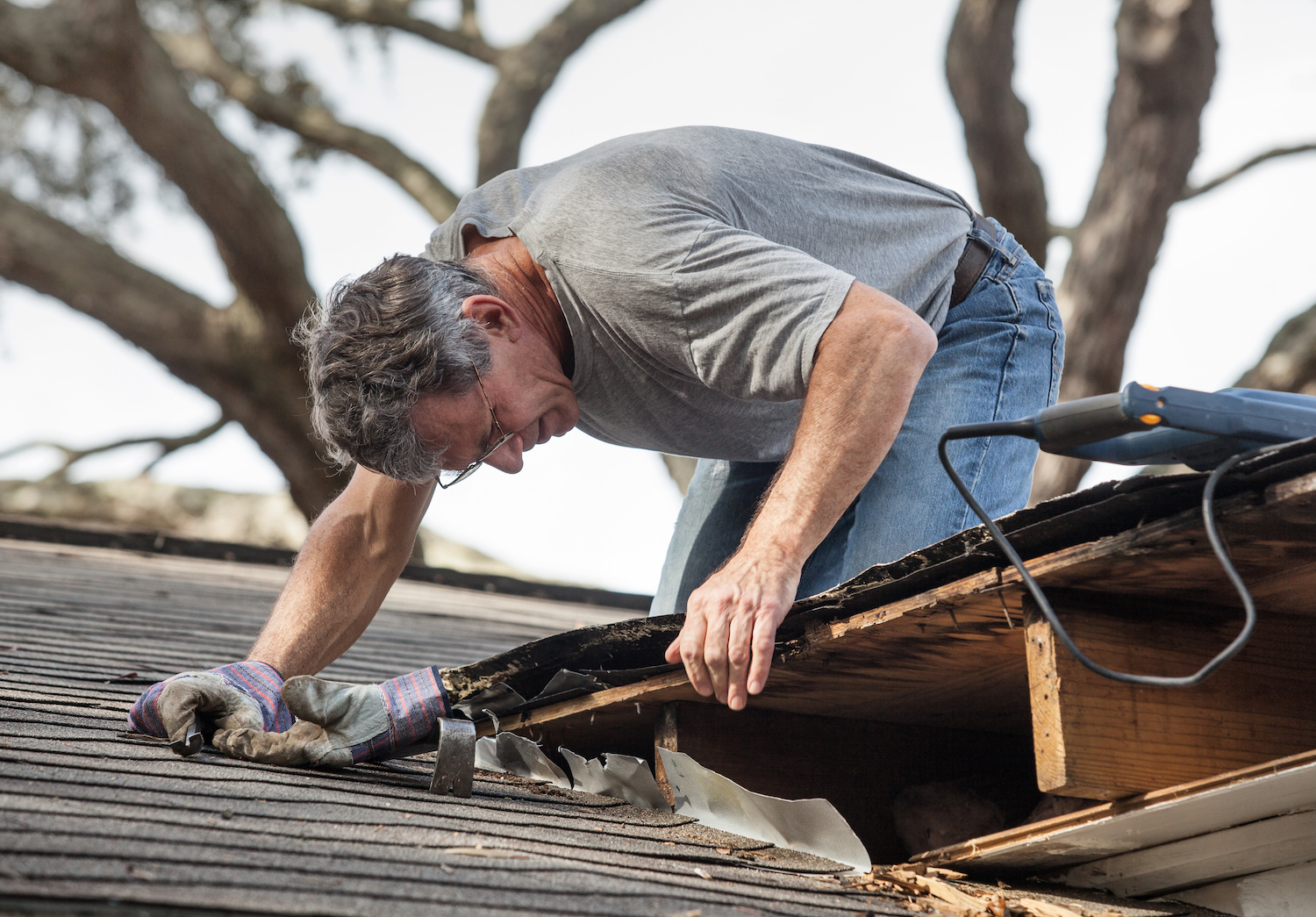



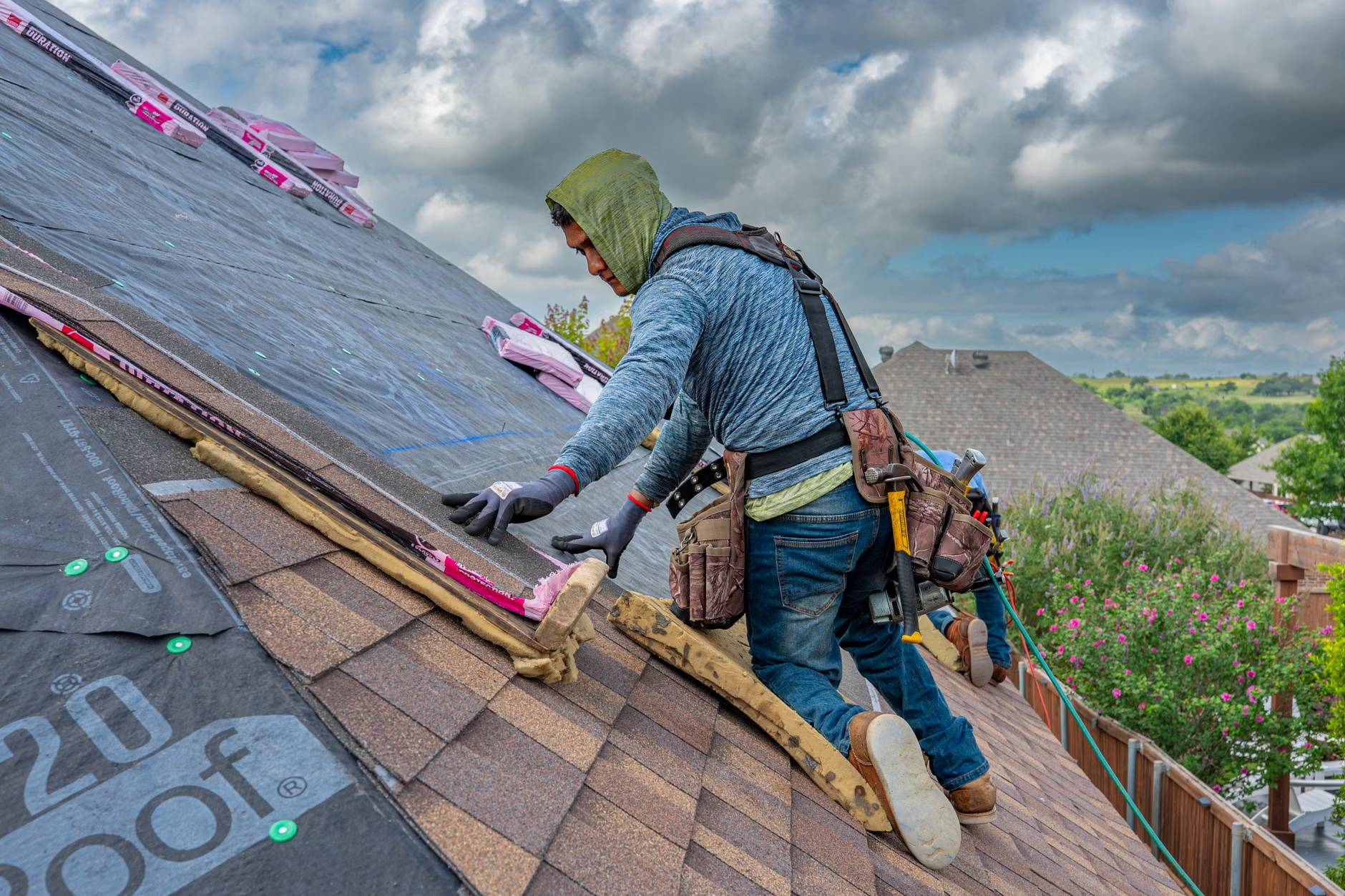
Late September into October is when we get the phone calls that start the same way. “The roof made it through summer fine, then we got that first hard rain and now there’s a stain.” Or you walk outside after a cool front and see a couple of tabs sitting up like they never sealed down. Sometimes it’s a drip at a vent pipe. Sometimes it’s granules piling up in the downspout elbow.
That pattern is common here because summer heat does a lot of quiet work on a roof. It bakes seal strips, softens and re-hardens caulks, and lets materials move a little every day. Then fall brings shorter days, cooler nights, and pop-up storms that hit with wind. A roof that was “okay” in July can show Texas City roof problems after summer by October, even without a named storm.
Shingle seal strips that never fully bond, then lift on the first windy rain
Architectural asphalt shingles rely on a factory-applied adhesive strip to bond the tabs down. That strip needs heat and pressure to activate, then it needs time to stay bonded. During a long hot stretch, the strip can get tacky, pick up dust, and then cool off before it ever makes a clean bond. We see it most on north-facing slopes, shaded areas under live oaks, and anywhere the roof stays damp in the morning.
Once fall wind shows up, a tab that is not sealed is a sail. Wind gets under it, flexes it, and that flexing breaks the shingle’s surface granules right at the bend. After a few cycles, the corner cracks and you end up with a missing tab after a squall.
If we’re checking for this, we do not just “look from the yard.” We hand-lift random tabs on each slope (gently) and feel for a firm bond. If it is loose, we look for the why: dust, misalignment, low-slope areas, or the wrong nailing line. Spot-sealing with roofing cement has its place, but it has to be done sparingly and under the right conditions so you do not create a hard bump that telegraphs through the shingle. If you’re dealing with shingles lifting or flapping in Texas City, that’s the same failure mode.
Pipe boots and other rubber penetrations that cook all summer, then split at the collar
Most homes have at least a couple plumbing vent pipes coming through the roof. The common boot is EPDM rubber over a metal or plastic base. EPDM handles sun better than a lot of rubbers, but it still ages. What summer does is accelerate it. You get long days of UV and roof surface temperatures that can push well above 140°F on dark shingles, then a cooler night that shrinks everything back down.
The first failure we see is a crack right where the rubber collar wraps the pipe. It can look like a tiny check mark. Water does not need a big hole. A small split will drip into the attic insulation and show up as a ceiling ring weeks later.
A second failure is the fasteners. Boots are usually nailed, and when the roof deck moves with heat, nail heads can back up a hair. If the installer relied on a thin bead of sealant over the nail heads, that sealant can dry and separate.
A fall check is simple: from the roof, look for a boot that is curling, brittle, or split. From the attic, look for dark staining around the pipe and damp insulation. A proper repair means the boot is integrated under the shingle courses, not just smeared with caulk on top.
Flashing sealant that dries out, then opens a path at chimneys, walls, and skylights
Flashing is metal work first, sealant second. The problem is a lot of roofs end up depending on sealant as the main waterproofing. Summer heat cooks common mastics and silicones. They shrink, they crack, and they pull away from metal edges. Then the first fall storm pushes water sideways.
The spots that bite homeowners are step flashing at a sidewall, apron flashing at the bottom of a chimney, and counterflashing where the metal is supposed to be tucked into a reglet or behind siding. If the counterflashing is just face-fastened and caulked, you can expect that caulk bead to fail sooner, especially on south and west walls.
We also see issues at skylights. Many skylight curbs have a metal flange and a gasket system. If someone tried to “help” it with roofing cement, that patch can harden, crack, and trap debris. Debris holds water. Water finds the crack.
A checkable tell is staining on brick or siding directly below a flashing line, or a rust streak from galvanized metal. Another is granules stuck in a cracked sealant bead. If we touch it and it crumbles like chalk, it is done. The fix is usually metal and proper laps, not another layer of goop.
Ridge caps and hip caps that take the most sun, then start to split at the nail line
Ridge and hip caps live at the highest point, and they get punished. They see the most UV, they dry out faster, and they flex with every temperature swing. If the caps were nailed too high, too low, or with nails that are too short to get solid bite, summer expansion can start working those nails up.
A classic fall symptom is a cap that looks “puffed” at one end, or a straight-line crack right across the cap where the nail is. Another is exposed nail heads along the ridge. Exposed nails are not automatically a leak today, but they are a leak waiting to happen. Once the neoprene washer on a roofing nail dries out, water follows the shank.
Ridge vent details matter here. A shingle-over ridge vent needs the right nail length. Most setups call for nails long enough to go through the cap, the vent plastic, and into the roof deck. If the deck is 7/16 inch OSB (common), and you add vent thickness, you cannot get lazy with short nails.
We also look at the ridge vent itself. If the end plugs are missing or crushed, wind-driven rain can get in. Fall storms do not have to be hurricanes to push water up and over a ridge. If you want the bigger picture on this, wind-driven rain roof leaks in Texas City, TX is the same story.
Nail pops and deck movement that show up after heat cycles, especially on older OSB
A nail pop is usually not the roof “failing.” It is the roof moving. Heat expands the deck and framing, then it cools and contracts. Over years, that cycling works fasteners loose. The nail head lifts, pushes the shingle up, and breaks the seal around the shank. Now you have a tiny hole right where water can sit.
We see more pops on roofs with 7/16 inch OSB that has taken on moisture at some point, and on older homes where the attic ventilation is uneven. If the deck edges are tight with no gap, expansion has nowhere to go, so it bows between rafters. You can sometimes see it as a slight wave line.
Inside the attic, you can check for shiny nail tips that have backed out a little. On the roof, you feel it underfoot as a soft bump. If you see a raised shingle with a single round bump under it, that is often a pop.
The right repair is not just pounding it back down. If you drive the same nail into the same enlarged hole, it will back out again. We usually reset with the correct roofing nail placement and seal the shingle properly. If pops are widespread, that is a bigger conversation about the deck, the fastening pattern, and the age of the system. If you’re trying to figure out if you’re in that territory, does your Texas City roof need new decking too is the next read.
Gutters that ran fine in July, then overflow in October because granules and leaf grit finally show up
Gutters are part of the roof system, even if they are bolted to the fascia. After summer, a roof sheds a lot of loose granules and dust. Add the first fall leaf drop, plus the gritty stuff that blows off the street, and the gutter starts acting like a trough full of sand.
Overflow in a fall downpour is not just annoying. Water sheets over the gutter edge, hits the fascia, and can get behind the drip edge. If there is no drip edge, or if it is cut short, water can wick back onto the roof deck edge. That is when you see rot at the eaves and staining along the soffit.
There are a couple specifics we look for. One is a sagging run where the hangers are spaced too far apart. Many modern installs use hidden hangers with screws, not spikes and ferrules, and they need to be tight into solid fascia. Another is the downspout outlet. That is where granules pile up first.
If your downspouts are dumping right at the slab, fall storms can also wash soil away and expose the foundation edge. Extensions and proper discharge points matter. In Texas City, TX, we want water moving away from the house, not recycling back under the eaves during the next squall. If you’re doing it yourself, best ways to clean gutters safely covers the basics without getting people hurt.
Storm-season small damage that stayed quiet in heat, then starts leaking once nights cool off
A roof can take a small hit in summer and not show it until fall. A soft bruise in a shingle mat, a slightly bent flashing corner, a loosened ridge cap, those can sit there while everything is hot and expanded. Then the first cool nights hit, the materials tighten up, and a gap opens.
This is where we see “mystery leaks” after a normal rain. The homeowner swears nothing happened. Then we get on the roof and find a single puncture near a valley, or a lifted shingle along a rake edge where wind got under it.
If there was a recent storm, insurance may be part of the conversation. What matters is documenting the damage before repairs hide it. Photos of the slope, the elevations, and close-ups of the specific failures help. So does checking soft metals like turbine vents, pipe jacks, and drip edge for impact marks. If you’re in that spot, what to do after storm damage lays out the order of operations.
A real detail people miss is the valley line. Closed-cut valleys and woven valleys handle water differently, and debris builds up there first. If a fall storm dumps leaves and grit into a valley, water can back up under the shingle edge.
If you are seeing stains, do not wait for the next big Gulf system. Small openings turn into rotten decking once the cool-season rains settle in. If you’ve got active water after a downpour, roof leak in Texas City after heavy rain, what to do first is the right starting point.
Key Takeaways
- Shingle tabs that never sealed in summer can start lifting in October wind, the first sign is corners you can hand-lift with little resistance.
- EPDM pipe boots often fail at the collar split, and a pinhole crack can soak attic insulation long before you see a ceiling stain.
- Sealant that’s chalky or cracked at flashing is not a “touch-up,” the fix is proper metal laps and integration under shingles or siding.
- Ridge caps split at the nail line when nails are too short or placed wrong, exposed nail heads on the ridge are a leak waiting to happen.
- Granules and fall leaf grit clog downspout outlets fast, overflow can wet the fascia and deck edge if drip edge details are weak.
Conclusion
Summer heat is a stress test, and fall weather is when the weak spots finally talk. If you’ve got a stain that showed up out of nowhere, tabs that look a little proud, or gutters that suddenly cannot keep up, it is worth getting eyes on the roof before the rainy pattern settles in.
Our approach is simple. We find the entry point, we look at how the water got there, and we fix it in a way that still works after the next heat cycle. If the roof is at the age where these little failures are stacking up, we will tell you straight what a replacement solves and what details we would build differently this time. In Texas City, TX, that saves a lot of drywall patches.
References
- NOAA: pop-up storms that bring wind and quick heavy rain
- National Roofing Contractors Association: flashing should shed water with metal laps, sealant is only a backup
- Owens Corning: architectural asphalt shingle products and how they are built
- Epdmroofs: EPDM rubber roofing basics and material information