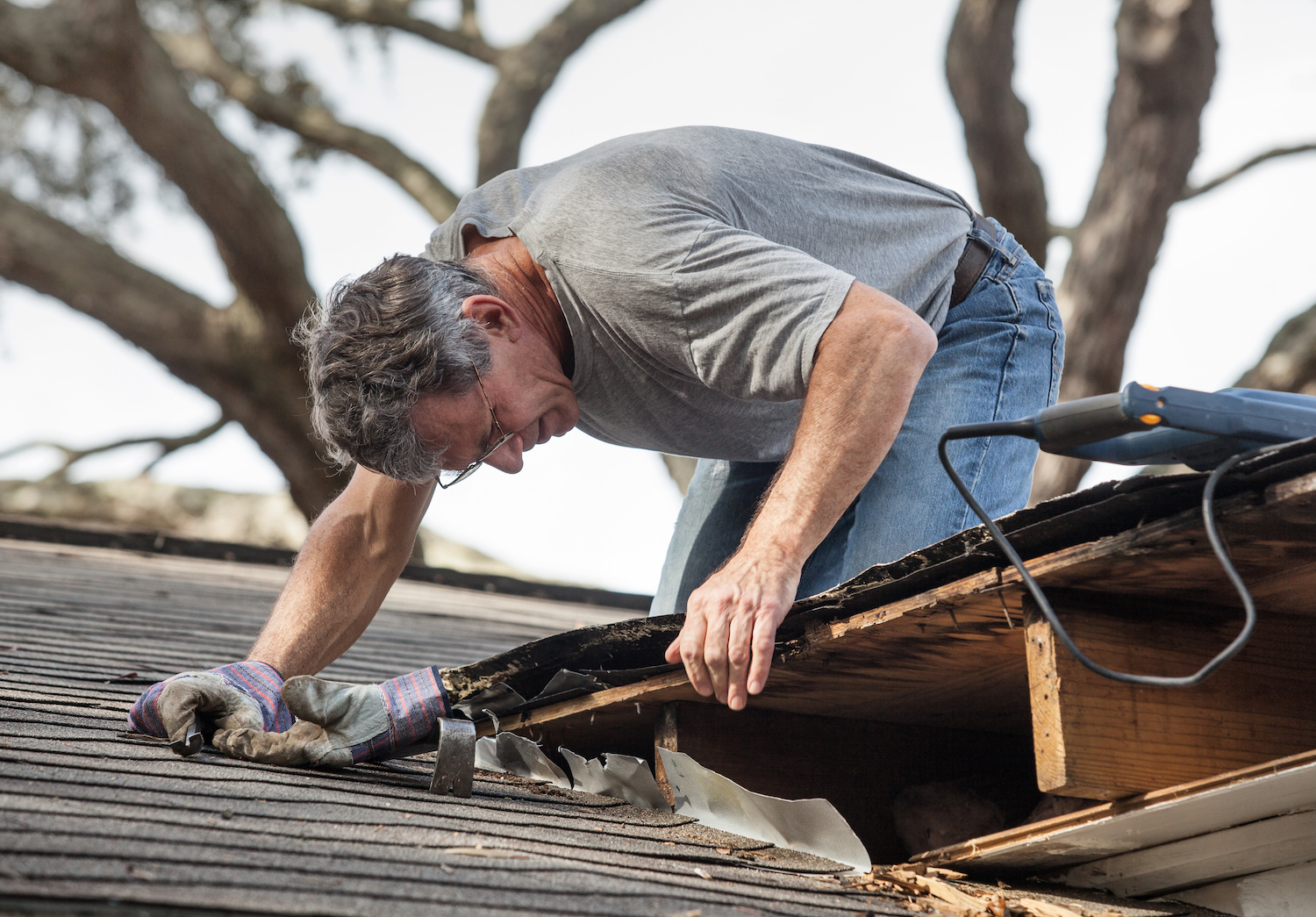


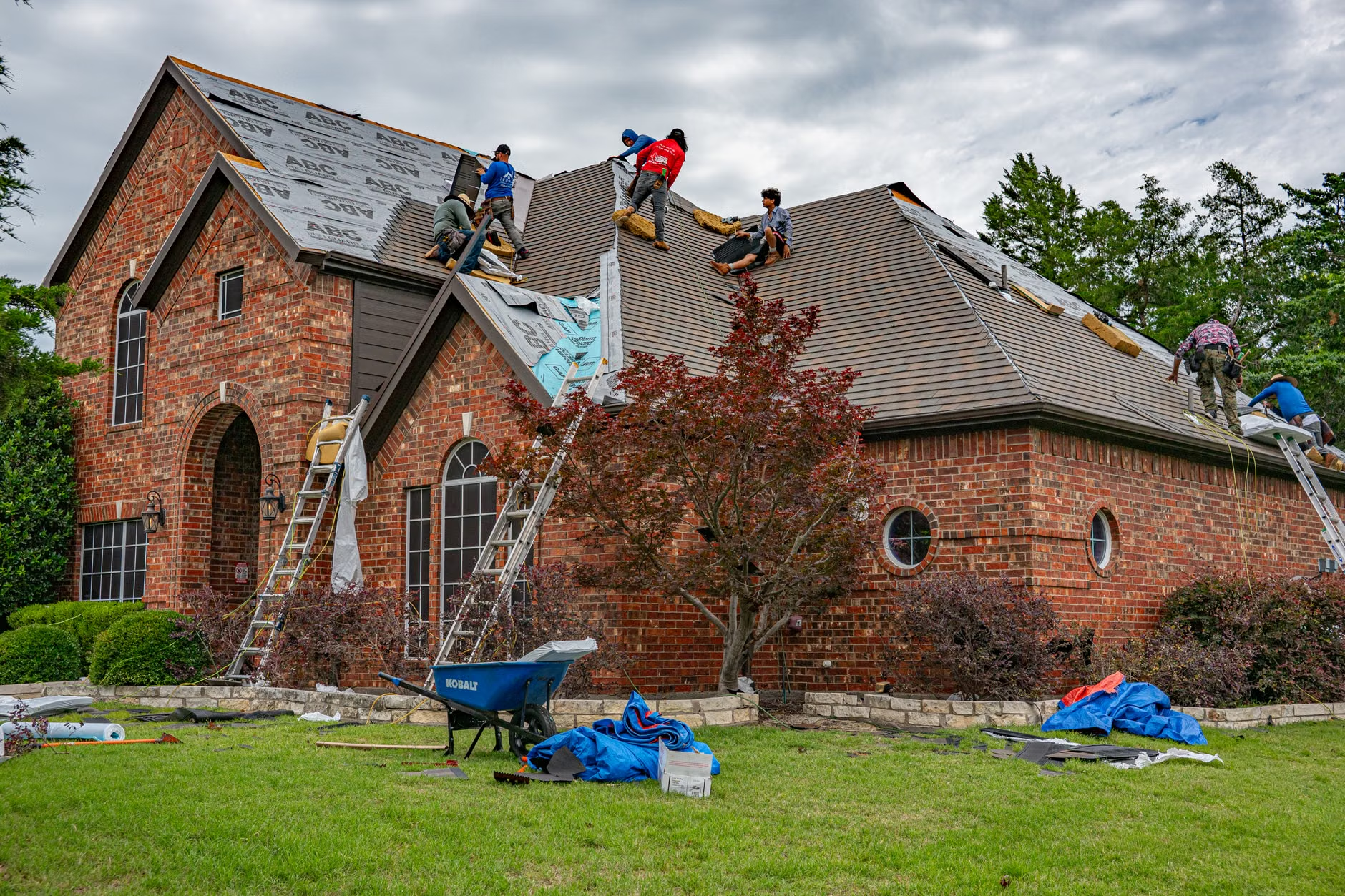
Heavy rain hits, you hear the drip, and then you see it, a brown ring spreading on the ceiling by an exterior wall. Maybe it’s over the living room, maybe it’s right under a bathroom vent, maybe it’s running down a window jamb. In Texas City, TX, we see this a lot after a hard Gulf downpour: the roof didn’t “fail everywhere”, it failed at one detail, and the water took the easiest path.
First move is not climbing up there with a flashlight in the middle of a storm. First move is controlling damage inside, making the area safe, and getting documentation started while it’s fresh. Then, once the rain lets up, you do a quick, methodical look at the usual suspects on local roof setups: pipe boots, step flashing at walls, valley metal, skylight curb flashing, and the drip edge line at the eaves.
Make it safe inside before you chase the leak
Start with electricity. If water is dripping near a ceiling light, a smoke detector, a fan, or any outlet on that wall, shut off the breaker for that circuit. Water and a 120-volt box do not mix, and we’ve seen wet drywall conduct enough to trip a breaker or warm up wiring.
Next, control the water. Put a bucket under the drip, then put a towel or a piece of cardboard in the bucket so it doesn’t splash. If the ceiling is bulging and holding water, make one or a few small, controlled relief holes at the lowest point so it can drain into a bucket. One small hole with a screwdriver in the lowest point is better than a blowout that drops a whole sheet of 1/2-inch drywall.
Move anything that wicks, rugs, books, upholstered furniture. Pull blinds away from a wet window frame. Then get air moving. A box fan and a dehumidifier help, and you want that running within the first 24 hours. Mold can start on paper facing of drywall fast in warm weather.
Document the leak like an adjuster will read it later
A roof leak claim lives or dies on clear, boring documentation. Take photos before you start wiping and cutting. Use your phone, but turn on the flash and take wide shots and close-ups.
Get these:
- The room location (stand in the doorway and shoot the whole ceiling).
- A close-up of the stain and the active drip.
- Any wet insulation you can safely see from an attic hatch.
- The outside elevation that lines up with the leak (for example, the wall with the chimney or the bathroom vent).
Then write down a few specifics while you still remember them: date, start time, how long it rained, and wind direction if you know it. Wind matters because wind-driven rain will push water uphill under shingles if the laps and seal strip are compromised.
If you have access to the attic, take one more photo with something for scale. A tape measure showing the stain is 18 inches across is more useful than “big wet spot.” Don’t throw away wet ceiling drywall or soaked insulation until you’ve documented it.
If you have attic access, check these three things first
Only go into the attic if the ceiling isn’t sagging and you have safe footing. Step on framing, not the back of drywall. Bring a headlamp and a piece of plywood if the attic is tight.
First, look for the trail. Water rarely drips straight down from the roof deck. It runs along a rafter, a truss chord, or the top of drywall and shows up 6 feet away. Follow staining on the wood. Darkened OSB seams and rusty nail tips are good clues.
Second, check penetrations. In our area, the most common are:
- 3-inch plumbing vent stacks through the roof
- Furnace or bath fan exhaust terminations
- Satellite or solar mounts (if you have them)
A cracked rubber pipe boot, a loose storm collar, or a nail pop at a flashing flange can leak only during heavy rain.
Third, look at the deck itself. If you see swollen OSB edges, that deck has been getting wet more than once. OSB that’s soft around a fastener line is a sign the leak wasn’t just “today.” That changes how we plan the repair and what we look for outside.
Do a ground-level exterior walkaround that actually helps
You can learn a lot without getting on the roof. Walk the whole perimeter and keep your eyes on transitions and edges.
Start at the eaves. If you have gutters, look for overflow marks and shingle grit piles. A clogged gutter can push water back under the first course of shingles. Drip edge matters here. Proper metal drip edge should extend into the gutter, and the underlayment should be lapped correctly so water sheds onto the metal, not behind it. If you’re not sure what’s safe to do yourself, start with best ways to clean gutters safely.
Look at valleys next. Open metal valleys can show dents, lifted edges, or debris dams. Closed-cut valleys can hide a problem, but you can still spot lifted shingle corners or a line of granule loss.
Then look at walls and chimneys. Step flashing along a sidewall should be layered with each shingle course. If you see a long, continuous piece of metal instead of individual steps, it can still work, but it’s more sensitive to movement and sealant failure.
If anything is hanging, flapping, or missing after the storm, take photos from the ground with zoom. Don’t climb wet shingles. Asphalt shingles get slick, fast.
Temporary tarping, what works and what causes more damage
A tarp is a short-term patch. The goal is to stop bulk water until we can inspect and make a real repair.
What works: a heavy-duty tarp (at least 10 mil) that extends past the problem area by several feet. We like to run it up over the ridge if the leak is near the upper half of the roof. Water runs downhill, but wind can lift and drive rain sideways.
What causes trouble: nailing a tarp right through the middle of a shingle field with a handful of roofing nails. Those nail holes become their own leaks. The better method is to use 1×3 wood strips to sandwich the tarp edge, then fasten the strip into solid decking or into the fascia where appropriate. If you do fasten into the roof deck, those fasteners need to be removed and properly sealed later. If you want the step-by-step, see how to tarp a roof leak.
Do not rely on caulk or roof cement as your main fix. A tube of sealant over wet, dirty shingles does not bond well, and heat cycles can peel it back.
If you cannot tarp safely, don’t. We’d rather show up to a wet ceiling than to a fall off a 6/12 pitch roof.
First inspection checkpoints on common local roof setups
Most homes we see around here have architectural asphalt shingles over OSB, with metal drip edge, ridge vent or box vents, and a mix of pipe boots and wall flashings. The leak points repeat.
Pipe boots: Rubber cracks around the 3-inch stack, or the boot gets lifted by thermal movement. The metal flange can also get nailed too high, leaving a nail head in the water path.
Vent and exhaust flashings: A bath fan termination with a loose flange or missing sealant line will leak during heavy rain. We check for fasteners that backed out and for broken plastic housings.
Valleys: Debris dams form where two roof planes dump into one channel. If the valley lining is compromised, water will find the decking seam.
Eaves: If the first shingle course is overdriven with nails, or the starter strip is missing, wind-driven rain can get under the edge. Ice and water shield at the eave helps, but it still has to be lapped right.
Skylights and chimneys: We look for step flashing, counterflashing, and the condition of the curb. A skylight curb needs proper flashing layers, not just sealant.
Insurance and storm damage, keep it clean and keep it factual
If the leak showed up right after a storm, treat it like storm damage until we prove otherwise. That means you keep notes and photos, and you don’t let anyone “fix” it in a way that hides evidence. If you want a clean checklist, read what to do after storm damage.
Don’t toss shingles that blew off. Bag them. Take a photo of the back side and the nail line. If there’s creasing from wind lift, that’s a specific failure mode.
If you’re filing an insurance claim, keep a simple timeline. Date of storm, when the leak appeared, what rooms were affected, and what temporary steps you took. Keep receipts for any emergency drying equipment rentals if you did that, and keep a record of any mitigation work. Insurance adjusters like clean documentation.
When our crews inspect, we’re looking for storm-related indicators like lifted shingle tabs, impact marks that broke the mat, exposed fasteners at flashings, and punctures at soft metals. We also separate that from wear issues like brittle seal strips on an older roof.
If you’re in Texas City, TX and the wind was up, tell us which side of the house took the weather. It speeds up the inspection. If you’re trying to reduce repeat storm issues, start with protecting roofs against hurricane damage in Texas City.
Key Takeaways
- Shut off the breaker if water is near any 120-volt fixture, then control the drip with a bucket and one small relief hole if the ceiling is bulging.
- Photos that show room location plus close-ups, taken before cleanup, carry more weight than a cleaned-up stain.
- In the attic, follow staining along rafters and look for rusty nail tips and wet OSB seams to trace the entry point.
- Ground checks should focus on eaves, valleys, pipe boots, and wall flashings, not the middle of the shingle field.
- A 10 mil tarp secured with 1×3 strips beats random nails through shingles, and sealant on wet shingles is not a fix.
Conclusion
A leak after heavy rain is a problem, but it’s usually a small detail that let go, not the whole roof giving up at once. Handle the inside fast, keep it safe, and document it like someone else is going to read it later, because they probably are. Once the weather breaks, we want a calm inspection with dry footing and clear evidence, not a rushed climb on slick shingles.
If you’ve got a roof leak Texas City TX homeowners deal with after a storm, get us the photos, the timeline, and the room locations. We’ll trace it from the inside out, then put a repair plan together that stops the water and holds up the next time the Gulf decides to open up.
References
- OSHA: Electrical safety basics for wet areas (water near outlets and boxes)
- CDC: Mold can start growing on the paper face of drywall in warm, damp conditions
- National Weather Service: Gulf Coast heavy rain and downpour safety info
- Ready.gov: If a leak starts right after a storm, handle it like storm damage until you can rule that out