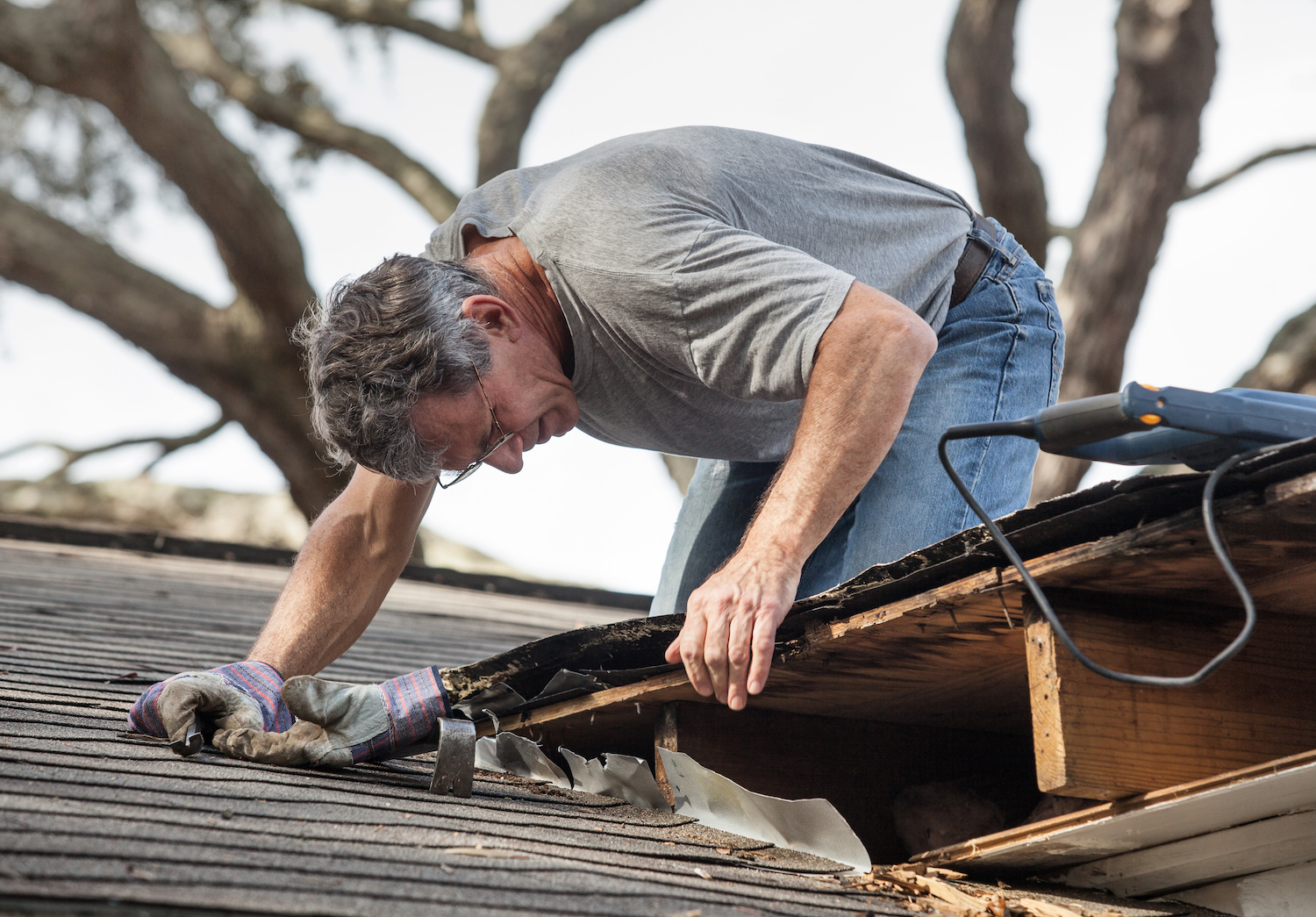




Hail comes through here fast. One minute it is a hard Gulf wind and rain, then you hear that sharp tapping on the gutters and the metal vents. Next day the yard looks fine, your truck has a couple new dings, and the roof looks “about the same” from the driveway. That is where folks get stuck.
Most hail calls we run in Texas City start the same way. A neighbor got a new roof, an adjuster is in the area, or you found a few black marks on a shingle and you cannot tell if it is damage or just scuffed granules. You do not want to file a claim on nothing, and you do not want to miss a real hit that turns into leaks six months later.
Here is how we sort hail bruises from wear, what patterns matter, and what documentation actually helps.
A real hail “bruise” is a soft spot with granule loss, not a surface smudge
On asphalt shingles, the hail damage that counts is usually a bruise. It is impact to the mat and the asphalt under the granules. You can have a roof that looks normal from 20 feet away and still has bruises.
A bruise has a few traits we can check. The spot often feels slightly soft under finger pressure. Not squishy like rotten decking, just a little give compared to the surrounding field. You may see granules displaced with the darker asphalt showing through. On laminated shingles, the hit can land on the raised portion and crack the seal line edge.
What does not count, most of the time, is a scuff. Scuffs happen from foot traffic, ladder hooks, branches, or even a bundle dragged during a past repair. They look like a smear, with granules still embedded and no fractured mat. We see it a lot around roof jacks, ridge vents, and along the eaves where someone has walked it in summer heat.
If the shingle surface is intact and the mat is not fractured, it is usually cosmetic. If the impact has compromised the shingle body, that is a different story.
Granule loss patterns tell the story, random specks do not
Hail does not remove granules in a neat, even way. It leaves a pattern that matches the storm. You will see clusters on one slope more than the other, usually the side that faced the wind. On a hip roof, the hits can wrap around the corners.
We look for:
- Fresh granules in gutters and downspouts. After a hail event, you can often find granules piled at the bottom of a downspout elbow. That is a checkable sign within days, not months. (If you need to clear things out safely first, see best ways to clean gutters safely.)
- Consistent impact spacing. Hail strikes tend to be scattered but consistent, not all in a tight line like someone scraped the roof with a tool.
- Edge hits and exposed asphalt. If the hail is large enough, it can knock granules off the leading edge of a laminate tab and leave a sharp boundary.
Random granules in a gutter by themselves do not prove hail. Shingles shed granules during the first year after install, and older roofs shed during hot months. The timing matters. If the gutters were clean last week and now you have a peppering of granules after the storm, that supports the hail story.
Soft metals and accessories are your control sample
A clean way to confirm hail size and direction is to check the soft metals. Asphalt shingles can be tricky. Metal dents are not.
We check the obvious targets first:
- Aluminum gutters and downspouts. Dents with sharp edges usually mean harder, larger hail. Look along the front face, not just the top lip.
- Roof vents and turbine heads. Thin aluminum around a static vent will show dings. Plastic vent hoods can crack at the corners. (If you want the bigger picture on why those vents matter, read why roof ventilation matters for homes in Texas City.)
- Flashing at chimneys and walls. Step flashing and counterflashing dents can line up with the windward exposure.
- AC condenser fins. Not roof-mounted, but it is a quick yard check for impact.
If we see multiple confirmed dents on soft metal, then we take the shingle inspection more seriously. If the soft metals are clean and the only “damage” is a few dark marks on one slope, it is often scuffing or algae staining.
One more specific. Hail impact marks on metal tend to be round. Tool damage and ladder hits are usually linear or have a crease.
What looks like hail but usually isn’t: blistering, algae, and foot traffic
A lot of roofs get called “hail damaged” when they are showing age or heat effects. Texas roofs see plenty of 95°F to 105°F days, and shingles respond to that over time. (Material choice matters here too, and choosing the right roofing materials for Texas City heat lays out what holds up better.)
Blistering is common. It shows up as small raised bumps that pop and leave tiny craters. That is manufacturing and heat related more than impact. The craters are often uniform across the field, not clustered on one slope.
Algae staining is another one. Those dark streaks are biological growth, usually strongest on north-facing slopes or shaded areas. Hail does not make long, vertical streaks that follow water flow lines.
Foot traffic damage is real, and it can look like “bruising” if you do not know what you are feeling for. In summer, shingles soften. A hard heel can scuff granules and crease a tab near a butt joint. You will see it near:
- ridge vents and attic fan service areas
- satellite mounts and pipe boots
- valleys where people tend to walk
We do not hand-wave this stuff away. We document it, because it matters for the claim and for the repair plan. If it is wear, we treat it like wear. If it is impact, we show the impact.
Documentation that helps an adjuster, and the stuff that wastes time
Insurance is paperwork and proof. The best documentation is clear, date-stamped, and tied to the storm.
Here is what we like to collect on a hail damage roof Texas City TX claim:
- Wide shots of each slope. One photo per slope from the ground, then closer shots from the roof.
- Close-ups with a scale. A simple tape measure or a coin next to the impact. The point is consistent size reference.
- Chalked circles. We lightly circle suspected hits with sidewalk chalk so impacts are visible in photos. Do not use paint.
- Soft metal dents. Gutters, vents, and flashing. These are easy for an adjuster to verify.
- Gutter granules. Photo of granule accumulation at downspout outlets or in a clean strainer basket.
What wastes time is a folder full of blurry zoomed-in photos with no context. Another time-waster is “before” pictures that are not actually before, just older shots with different lighting.
Timing matters too. If you wait 6 months, UV and rain can wash away the obvious signs. We would rather document within a week or two of the storm, even if you are not sure yet. (If you are still in the first day or two after a storm, what to do after storm damage helps you triage the basics.)
What we look for on the roof deck and in the attic after hail
Hail rarely punches straight through a shingle into the attic, but it can shorten the roof’s life by compromising the shingle body. The follow-on problems show up later as leaks at the weak points.
On the roof, we check the details that fail first:
- Pipe boots. Rubber collars crack with age. Hail can accelerate splits at the cone. A 1.5 inch to 3 inch plumbing vent is a common leak source.
- Valleys. Closed-cut valleys and woven valleys can hide bruising and granule loss. Water concentrates here.
- Ridge caps. Caps take more direct hits. If the seal strip is compromised, wind can start lifting them.
- Flashing laps. Step flashing at walls has layered joints. If hail bends an exposed edge, water can work in during wind-driven rain.
In the attic, we are not hunting for daylight. We look for staining and moisture patterns. A brown ring on decking or a damp insulation spot tells us where water has been traveling. On a hot day, a fresh leak can show as darker plywood around a nail line.
If we find decking that is already soft or delaminated, that changes the scope. Hail is not the only cause, but it can be the event that pushes a marginal roof over the edge. (If you are wondering how that gets handled, does your Texas City roof need new decking too is the straight answer.)
Repair decisions: spot fix, full slope, or full replacement, and why the seam lines matter
Hail claims and repairs get messy because shingles are a system. You cannot treat them like individual tiles.
A few key realities drive the repair plan:
- Seal strips and bonds. Laminated shingles rely on a factory-applied seal strip. If a hail hit fractures the shingle near the seal line, that tab can start lifting in the next wind event. (If you are already seeing movement, shingles lifting or flapping in Texas City, is it an emergency or can it wait will help you sort urgency.)
- Brittleness in cooler weather. In winter, shingles are less forgiving. Hand-sealing and careful lifting matter if we are doing repairs outside warm months.
- Matching and tie-in. Even if color is “close,” the thickness and shadow line of a laminate shingle can be different across batches. If the damage is scattered across a slope, spot repairs can leave a patchwork that still has compromised shingles between the patches.
- Accessory components. Underlayment, drip edge, pipe boots, ridge vent, and flashing all have to work together. If we are replacing slopes, we look at the whole edge and penetration package, not just the field shingles.
We base the recommendation on what we can prove on the roof, what is actually damaged, and how the roof will perform next season. In a Gulf Coast market, the next big rain is not a gentle one. If the roof is borderline, we lean toward a repair plan that does not depend on luck. (Wind-driven water is its own problem, and wind-driven rain roof leaks in Texas City TX explains why.)
Key Takeaways
- A hail bruise is often a soft spot with granule loss and mat damage, a surface scuff usually is not.
- Fresh granules piled at downspout elbows within days of a storm support a hail timeline.
- Dents in aluminum gutters, vents, and flashing are a reliable control sample for hail impact.
- Blistering, algae streaks, and summer foot traffic can mimic hail marks but leave different patterns.
- Photos that help are wide shots per slope, close-ups with a scale, and chalked circles on suspected hits.
Conclusion
If you are staring at a few dark marks and trying to decide what to do, do not guess from the driveway. Hail damage is a pattern problem, and it shows up in the feel of the shingle, the way granules move, and the dents on the soft metals. We can document it cleanly, then you have something solid to work with if you decide to involve insurance.
If you are in Texas City and the storm was recent, get the roof looked at while the evidence is still fresh. We will tell you what is hail, what is wear, and what needs attention now so you are not chasing leaks the next time the Gulf weather turns sideways.